Tuesday, November 14, 2017

To the Jedi Academy, Return Victor Must - Youngling Battles Alarm Clocks, New Kids, and Rumors in Year Two

Jedi Academy: The Force Oversleeps by Jarrett J. Krosoczka


Hello, Readers!

This week, 4th grade book club members are discussing Jedi Academy: The Force Oversleeps by Jarrett J. Krosoczka. This graphic novel is the fifth book in the Star Wars Jedi Academy series, and it continues to entertain with relatable characters, humorous situations, and simple, yet important, lessons in humanity.

Victor Starspeeder is back at Jedi Academy for year two, but it's not going the way he'd planned. He was thrilled about Drama Club and hoped to get the lead in this year's musical. But a new kid got the role! What gives?! Plus, he keeps oversleeping and arriving at class late.

Worst of all, his big sister Christina is getting ready to graduate from Jedi Academy, and there are rumors going around that she's a Sith! What's a Padawan to do? In times when he feels more alone than ever, Victor will have to trust the ways of the Force and his friends if he's going to survive year two.

(Source: https://www.scholastic.com/kids/book/the-force-oversleeps-by-jarrett-j-krosoczka/)


Possible Discussion Questions:

  1. What formats of writing appear in this story, and which was your favorite? Did the multiple formats of writing make it more challenging or more entertaining as you read?
  2. New Beginnings - Why is Victor looking forward to this school year? How is Zavyer new and not new at the same time?
  3. Friendship - Friendship is a subject that is explored in The Force Oversleeps. What lesson(s) or message(s) did you learn about friendship by reading this story?
  4. Family - Describe Victor’s relationship with his sister, Christina. What is going on at school (or on Stargram) that has Victor concerned about Christina? 
  5. Emotions and the Force - Why did Yoda say that it was important to talk and get your feelings out instead of letting them stay bottled up inside? 
  6. Growth - Which characters changed the most in this story? In what ways? 
  7. Learning – What did Victor learn this year, both literally from attending his classes at school, and more importantly, through his experiences with his friends, family, and teachers?
  8. Humor - Humor is a big part of the Jedi Academy series. What part did you find the funniest? What strategies or techniques does Jarrett J. Krosoczka use to make the story funny (for example, references to the Star Wars books/movies)?

Curriculum Connections:

  • Visit Jarrett J. Krosoczka's web site to learn more about him and the other books he has written and illustrated.
  • Character Development (friendship, problem solving, working together)

    What 4th Grade Book Club Members Thought:

    • Our rating: 4.9 out of 5 - Wow! We loved it!
    • "My favorite part was when the 2nd and 3rd years had a light saber tournament." --Varun
    • "I want to talk about the Stargram posts." --Rehet
    • "How did their father turn Sith?" --Jack
    • "I wondered what did his mom and sister talk about?" --Addie
    • "My favorite part was the light saber tournament when Krio Vin invades Victor's mind." --Alex
    • "Why did Victor want to be a star speeder driver?" --Jeb
    • "I wondered how long the Academy has been around." --Ryan
    • "My favorite part was when it said, 'If you can't help your sister, annoy her.'" --Hailey
    • "How come Viktor got crazy mad about his sister calling him a Nerf Herder?" --Varun
    • "My favorite part was when the book showed Victor's report card and he never got an 'A'!" --Anjulia

      If You Like This Book, You Might Try Reading These:


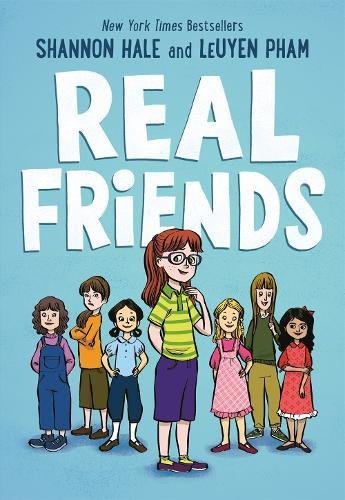
          Image result for diary of a wimpy books   Image result for real friends shannon hale


      What We're Reading Next:


      Wednesday, November 8, 2017

      Cats and Dogs ... Playing Together? Another Pleasing Graphic Novel by Pilkey


      Dog Man: A Tale of Two Kitties by Dav Pilkey


      Hello, Readers!

      This week, 2nd and 3rd grade book club members are discussing Dog Man: A Tale of Two Kitties by Dav Pilkey. This graphic novel is full of humorous puns, heartwarming characters, and page-turning adventure. If you have never given graphic novels a try, I encourage you to step outside of your comfort zone and read the Dog Man books. Before young readers have time to realize what just happened, Pilkey will subliminally "illustrate" how to be humans of character through his stories.

      He was the best of dogs... He was the worst of dogs... It was the age of invention... It was the season of surprise... It was the eve of supa sadness... It was the dawn of hope...

      Dog Man, the newest hero from the creator of Captain Underpants, hasn't always been a paws-itive addition to the police force. While he can muzzle miscreants, he tends to leave a slick of slobber in his wake! This time, Petey the cat's dragged in a tiny bit of trouble—a double in the form of a super-cute kitten. Dog Man will have to work twice as hard to bust these furballs and remain top dog!

      (Source: http://www.pilkey.com/book/dog-man-a-tale-of-two-kitties-dog-man-3)


      Possible Discussion Questions:

      1. At the beginning of the story, Chief gives Dog Man a job to do. Why might it be a bad idea for Dog Man to take that job?
      2. How does Petey break out of jail?
      3. Is Li’l Petey a clone of Petey? How do you know?
      4. When did Dav Pilkey use foreshadowing (a hint that something is about to happen) in this story? See page 51.
      5. How did it both hurt and help Li’l Petey to constantly ask, “Why?”
      6. Do you like the Flip-o-Rama pages? Do you make sound effects when you do the Flip-o-Rama?
      7. Which characters in this story were mean and grumpy? Why do you think they acted that way?
      8. Which characters were heroes in this story? How do you know?
      9. There are tons of puns (jokes using a word that has multiple meanings or two words that sound similar) in this story. Find an example of a pun you thought was funny.
      10. Which characters changed the most in this story?
      11. What lesson or message did you learn by reading this story?
      12. Do you think Dav Pilkey has pets? What type of pets do you think he has?

      Curriculum Connections:

      • Visit Dav Pilkey's web site to learn more about him and the other books he has written and illustrated.
      • Character Development (friendship, problem solving, working together)
      • Art (how to draw characters, how to animate drawings using flip-o-rama)

        What 2nd and 3rd Grade Book Club Members Thought:

        • Our rating: 4.6 out of 5 - We loved this book, and it made us laugh.
        • "My favorite part was the cloning machine." --Caleb
        • "My favorite part was Li'l Petey saying, 'Why?' It was weird! And the 'Supa Awesome Science Center Over There'." --Sanika
        • "My favorite part was when Li'l Petey made Flippy good." --Boris
        • "I wondered how strong was Dog Man to break a chair?" --Rivian
        • "My favorite part was when they went into Dog Man's house. On the outside it was small, and in the inside it was big." --Jake
        • "How did Li'l Petey do the same 'Grrr ruff ruff' noises like Dog Man?" --Boris
        • "My favorite part was when Chief fell down on his back because of Dog Man." --Valeria

          If You Like This Book, You Might Try Reading These:


          Image result for big dog and little dog by dav pilkey  Image result for jedi academy    Image result for diary of a wimpy books


          What We're Reading Next:


          Tuesday, October 24, 2017

          Ten Kids in a Treehouse to Protest Parent Problems - The Ultimate Slumber Party, or a Disaster Waiting to Happen?

          The Great Treehouse War by Lisa Graff

          Hello, Readers!

          This week, 5th grade book club members are discussing The Great Treehouse War by Lisa Graff. Are you ready for this epic "kids versus parents" showdown?

          There are a lot of things you should probably know to understand why a bunch of kids decided to climb up a treehouse and not come down. But to really understand it, you'd probably have to go way back in time, and peek through the living room window of a girl named Winifred Malladi-Maraj, on her last day of fourth grade . . .

          That was the day everything changed. The day Winnie's parents got divorced, the day they decided Winnie would live three days a week with each of them and spend Wednesdays by herself in a treehouse smack between their houses, to divide her time perfectly evenly. It was the day Winnie's seed of frustration with her parents was planted, a seed that grew until it felt like it was as big as a tree itself.

          By the end of fifth grade, Winnie has decided that the only way to change things is to barricade herself in her treehouse until her parents come to their senses - and her friends decide to join her. It's kids versus grown-ups, and no one wants to back down first. But with ten kids in one treehouse, all with their own demands, Winnie discovers that things can get pretty complicated pretty fast! All th rules have been thrown out the window, but does Winnie have what it takes to hold her ground and keep everyone happy?

          (Source: inner book flap)

          Possible Discussion Questions:

          1. Describe Winnie's parents' personalities. How do they cause a major problem for Winnie? What other options could Winnie's parents have tried instead of the "completely even" division of time?
          2. Why does Winnie decide to stay in the treehouse instead of coming back down?
          3. How do the kids "get away with" staying in the treehouse? What is the history of the tree that allows them to stay there?
          4. Was the list of demands put forward by the "Treehouse Ten" reasonable, unreasonable, or somewhere in between? Why?
          5. Some people thought the "Treehouse Ten" were rabble-rousers, and some people thought they were heroes. What do you think? Why?
          6. What strategies did the adults use to try to get the kids out of the treehouse?
          7. When and how did things start to turn bad for the kids? What position did Winnie find herself in when things started to turn bad?
          8. Why do you think the kids began to leave the treehouse?
          9. Which of Winnie's friends was your favorite character? Why?
          10. What did you think of the format of this book (memoir, sticky notes, transcripts, letters, etc.)? Did you find it interesting, confusing, entertaining, etc.? What was your favorite type of writing to read?

          Curriculum Connections:

          • Visit Lisa Graff's website to learn more about her and the other books she has written.
          • Communication Skills (listening, observing closely, making compromises, critical thinking, questioning accuracy of news reports)
          • Character and Social/Emotional Development (dealing with divorce, friendship, problem solving)
          • STEM (design, architecture, survival)
          • Social Studies (embassies and consulates)

          What 5th Grade Book Club Members Thought:

          • Our rating: 4.2 out of 5 - We really liked it.
          • "I want to talk about how at the end Winnie saw how her friends were fighting and got a family member to write." --Katie
          • "If I could be a character in this book, I would be Winnie because I like that Winnie stayed up there and didn't come down until her parents came to [their] senses." --Eliza
          • "I want to talk about how the kids got in fights." --Aditi
          • "I wondered what [the kids] would be like in middle school." --Sophie
          • "One question I wondered was how on earth would the kids be so driven and why?" --Alex
          • "I love how [Lisa Graff] put in the book pages for how _____ is made." --Jordyn
          • "I want to talk about how cool [it was that] they stayed up in the treehouse so long." --Alexa
          • "I would be Squizzy because she was funny and loves books like me." --Aditi

          If You Like This Book, You Might Try Reading These:


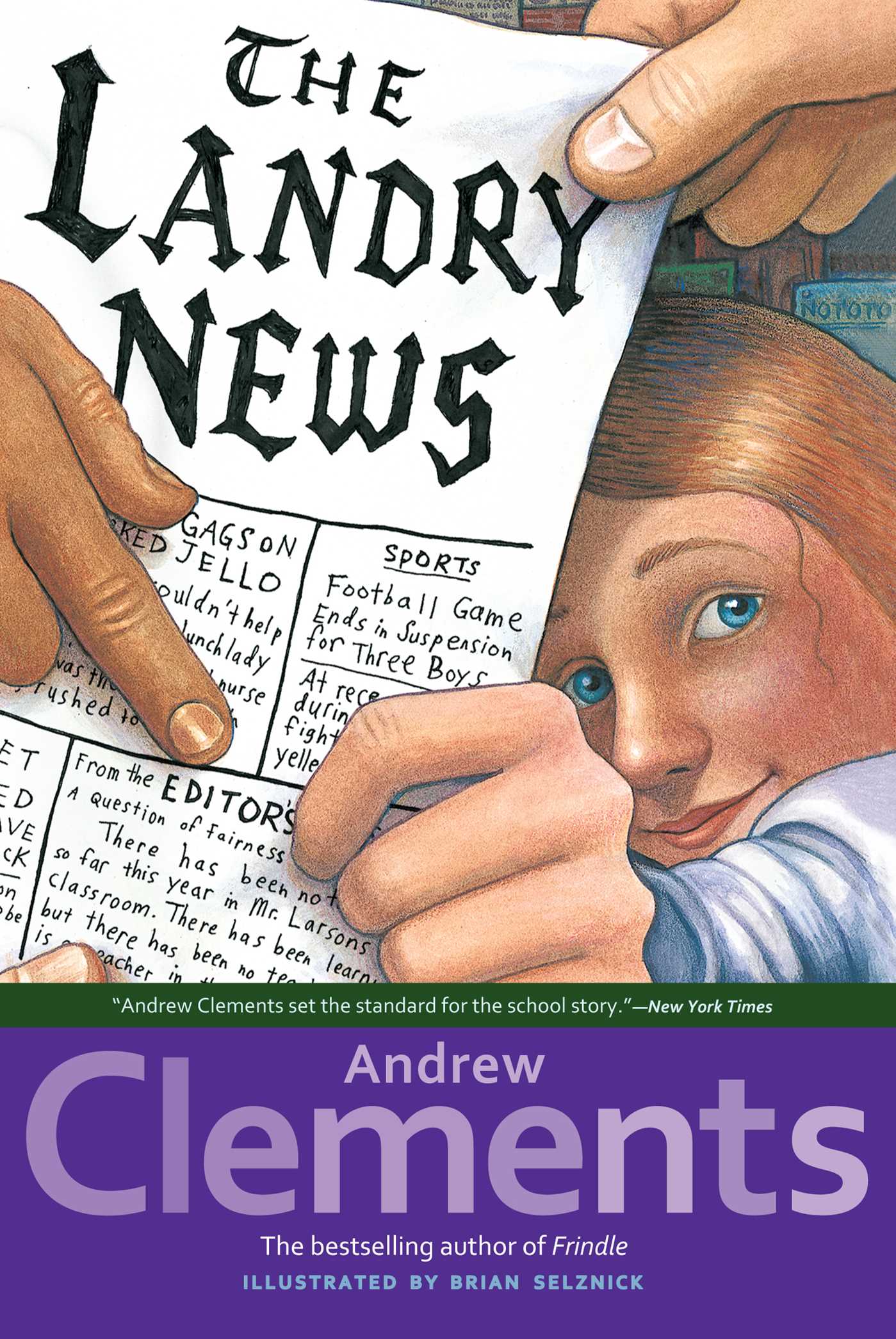
          Image result for the landry news  Image result for dear mr. henshaw     

          Tuesday, October 17, 2017

          Wishes and Unlikely Friendships Bring Hope to a Community


          wishtree by Katherine Applegate


          Trees can't tell jokes, but they can certainly tell stories. . . .

          Red is an oak tree who is many rings old. Red is the neighborhood "wishtree" —people write their wishes on pieces of cloth and tie them to Red's branches. Along with her crow friend Bongo and other animals who seek refuge in Red's hollows, this "wishtree" watches over the neighborhood.

          You might say Red has seen it all. Until a new family moves in. Not everyone is welcoming, and Red's experiences as a wishtree are more important than ever.

          Funny, deep, warm, and nuanced, this is Katherine Applegate at her very best—writing from the heart, and from a completely unexpected point of view.

          (Source: http://www.wishtreebook.com/#book)


          Possible Discussion Questions:


          1. RED – What is Red? Describe her personality. Why does Red decide to speak to the kids when she isn’t supposed to speak to humans?
          2. BONGO – Who is Bongo? Describe the friendship between Red and Bongo. What differences do they have? Why do you think they are friends? Why do you think Bongo gives Samar little tokens or gifts?
          3. SAMAR - Describe Samar’s personality. Why does Samar always come out to sit under Red late at night? What was Samar’s wish? Why isn’t the neighborhood welcoming toward Samar’s family?
          4. WISHES – How are wishes both a problem and a solution in this story? Discuss Red’s plans for helping to make Samar’s wish come true.
          5. THE ANIMALS - Discuss how the various animals choose their names (crows, frogs, skunks, barn owls, raccoons, opossums). Why are they comfortable with Samar? Why do you think the animals are able to live together as a community?
          6. STEPHEN - Describe Stephen’s personality. How does he help to make a difference in the neighborhood on Wishing Day? When Stephen says, “My parents aren’t bad people. They’re just … afraid of things” (p. 125), what does he mean?
          7. FRANCESCA – What role does Francesca play in the story? Who and what would be affected by her decision to cut down the tree?
          8. SOLUTIONS - “Hollows are proof that something bad can become something good with enough time and care and hope” (p. 25). What do you think Red means when she says this? What are some examples of something good coming from something bad (in this story or in your life)?
          9. FRIENDSHIP – On p. 82, Red asks Bongo, “How does friendship happen?” What do you think? What examples of “unlikely friendships” show up in this story?
          10. MESSAGES – What message(s) do you take away from this story?


          Curriculum Connections:


          • wishtree Teacher's Guide provided by the publisher
          • Character Development (friendship, problem solving, kindness)
          • Social Studies (communities, immigration, traditions)
          • Real World Problems (discrimination, community building)
          • Language Arts (names, groups of animals)
          • Science (deciduous trees, woodland animals)


          What 4th Grade Book Club Members Thought:


          • We rated it a 4.1 out of 5 - we really liked it.
          • "I want to talk about how the wishtree told his story because he believed he would die." --Jack
          • "Did the tree have a gender?" --Ryan
          • "Who was the one who did the carving in the tree?" --Gabby
          • "Why did Francesca want to cut down the wishtree?" --Jeb
          • "Can animals actually talk?" --Rehet
          • "I want to talk about why the animals all ran up the tree at the last minute." --Hailey
          • "I wondered who was the boy who carved the leave sign." --Alex
          • "I want to talk about the boy with the screwdriver." --Ryan
          • "One word that stuck out to me was buttinsky." --Varun
          • "I want to talk about Plan Two when the baby opossum doesn't listen that well." --Addie


          If You Like This Book, You Might Try Reading These:


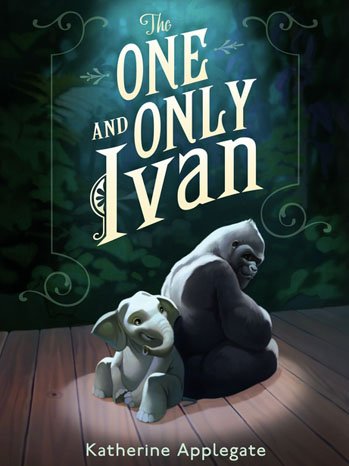
          Image result for One and Only Ivan Katherine Applegate  Image result for Wonder A.J. Palacio  Image result for the tale of despereaux


          What We're Reading Next:


          Jedi Academy: The Force Oversleeps by Jarrett J. Krosoczka

          Wednesday, October 11, 2017

          How Hard Could It Possibly Be for a Third Grader To Be a "Perfect" Angel?


          Third Grade Angels by Jerry Spinelli


          First grade babies!
          Second grade cats!
          Third grade angels!
          Fourth grade rats!

          So goes the rhyme at George (aka "Suds") Morton's elementary school. Suds has been looking forward to third grade so he can finally be an angel. But what does that mean, exactly?

          It means his teacher, Mrs. Simms, will hold a competition every week to see which student deserves to be awarded "the halo" - which student is best-behaved, kindest to others, and, in short, perfect. Suds is determined to be the first to earn the halo, but being good all the time can be pretty stressful. Does he have to be good even outside of school? Does he have to be nice to his annoying little sister? And if Mrs. Simms doesn't actually see him doing a good deed, does it even count? (Source: inside book flap)

          Possible Discussion Questions:

          1. On page 18, Suds says, "All of a sudden it was like there was no door between my brain and my mouth." What does he mean? Why do you think that was happening? Have you ever been in a similar situation?
          2. Why do you think Suds feels a bit uncomfortable about Joey?
          3. What does Suds mean when he says he feels "chipmunky?" When have you ever felt that way?
          4. What strategy does Suds use to help himself calm down when he worries? What do you do when you need to calm yourself down?
          5. On page 48, Mrs. Simms says, "This may be the first class where nobody gets a halo." Why does Mrs. Simms say this?
          6. Why does it bother Suds when his sister, whom he calls Zippernose, says, "He always has to be first..."? (page 55-56)
          7. What did Mrs. Simms mean on page 63 when she said, "Yes - you must earn your halo. But no - you may not buy your halo. I cannot be bribed."
          8. Suds wonders, "Does it count if the teacher doesn't see it?" What do you think?
          9. "Being nice means doing something, not doing nothing." Agree or disagree? Why?
          10. Even when Suds was doing many good deeds and trying hard to be an angel, he couldn't relax. Why was he still worried? (page 91)
          11. Who wins the first halo, and why?
          12. Do you think Mrs. Simms has "spies"?

          Curriculum Connections:

          • Visit Jerry Spinelli's website to learn more about other books he has written.
          • Character Development (problem solving, how to deal with stress and worries)

          What 2nd and 3rd Grade Book Club Members Thought:

          • Our rating: 4.1 out of 5
          • "My favorite part was when he saved the dog." -- Joliz
          • "I want to talk about why Constantina got the first halo of the year, but George did the same thing." -- Jake
          • "One question I wondered was does Mrs. Simms have spies?" -- Rivian

          If You Like This Book, You Might Try Reading These:


          What We're Reading Next:


          Wednesday, September 6, 2017

          It's National Read A Book Day - How Can I Choose Just One?

          Hello, Readers!

          It's National Read A Book Day 2017. This little fact made me think three different thoughts nearly simultaneously:
          So many great stories to read!
          1. National Read A Book Day is a "thing"? A real event? I had never heard of it. Who started this day? Is there a specific organization responsible? I know about Read Across America Day and The Global Read Aloud and Poem In Your Pocket Day, but National Read A Book Day is new to me. So, yay! Let's all celebrate reading books by actually reading books today.
          2. Shouldn't every day be "Read A Book Day"? I mean the book lover part of me can't imagine not spending some time reading each and every day. There are more books in my "to-be-read" pile than I will ever have time to read.
          3. I'm incredibly thankful for children's book authors and the prolific amount of writing they produce. Just look at the stack of books I'm reviewing in preparation for our WILD(er) About Reading book club meetings in the upcoming school year. I am so excited to share these great books with readers in grades 2 through 5 this year. We are going to have some fascinating discussions.

          What are you reading today?

          What books are you planning to read this school year?

          What books will you recommend to your friends or students?


          Happy reading!


          Sunday, May 7, 2017

          Three Boys Skip School and Go on a Modern-Day Quest to Honor a Teacher None of Them Will Ever Forget

          Hello, Readers!

          This week fifth graders are discussing Ms. Bixby's Last Day by John David Anderson. This funny, heartwarming, and heartbreaking story is told from the points of view of three different characters: Topher, Brand, and Steve, all of whom are students in Ms. Bixby's sixth grade classroom at Fox Ridge Elementary School.

          When Ms. Bixby unexpectedly announces that she won't be able to finish the school year, Topher, Brand, and Steve come up with a risky plan - more of a quest, really - to give Ms. Bixby the last day she deserves. Through the three very different stories they tell, we begin to understand what Ms. Bixby means to each of them - and what the three of them mean to each other.

          Everyone knows there are different kinds of teachers. The boring ones, the mean ones, the ones who try too hard, the ones who stopped trying long ago. The ones you’ll never remember, and the ones you want to forget. Ms. Bixby is none of these. She’s the sort of teacher who makes you feel like school is somehow worthwhile. Who recognizes something in you that sometimes you don’t even see in yourself. Whom you never want to disappoint. What Ms. Bixby is, is one of a kind.


          Through the character's trials and tribulations, we learn that "courage is knowing you're licked before you begin but you begin anyway and you see it through no matter what." Kudos to author John David Anderson for writing an amazing and beautiful story. This book will remind you of your most remarkable teachers, your friends, your parents, your siblings, your struggles, your favorite books and quotes. It's a winner.

          Discussion questions can be found here, and other links to author John David Anderson's books and website can be found on the Grade 5 page.

          Happy reading!